East vs North vs South Bengaluru: Comparing Micro-Markets
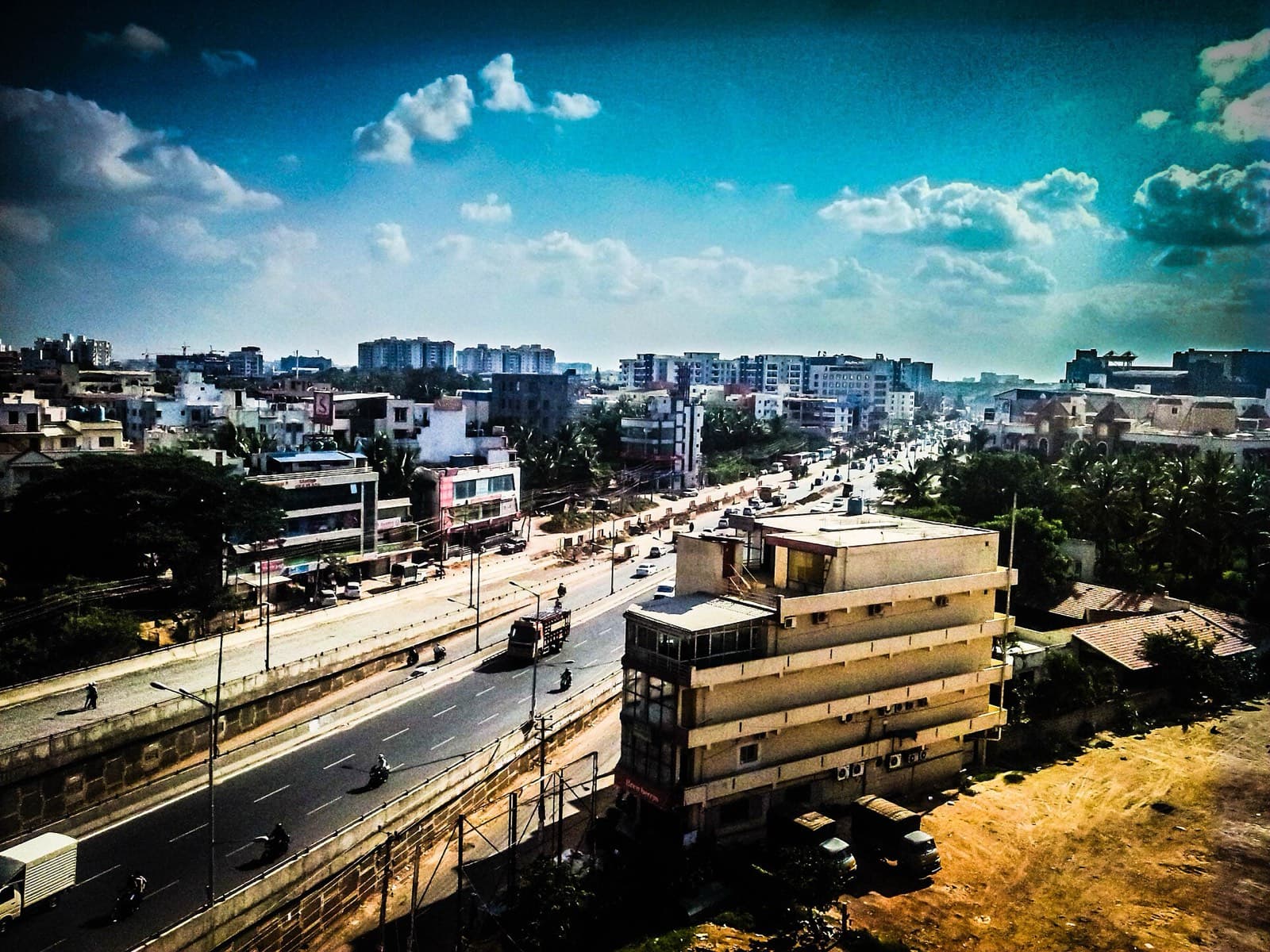
Cover photo: Wikimedia Commons / Ashwin Kumar from Bangalore, India — CC BY-SA 2.0
A practical, zone-by-zone comparison of East, North and South Bengaluru resale micro-markets covering connectivity, rental yields, price trends and which buyer each corridor genuinely suits in 2026.
Why Bengaluru Is Really Three Cities in One
Anyone moving to Bengaluru quickly learns that the city does not behave like a single property market. It behaves like three loosely connected ones, each pulling on a different economic engine. The East rides on IT and global capability centres, the North is powered by the airport and its expanding aerospace and business belt, and the South leans on decades of established residential fabric and old-money neighbourhoods. For a resale buyer weighing a Sobha apartment, understanding which of these engines drives a locality matters far more than the glossy brochure ever will.
These differences are not cosmetic. They shape commute times, tenant profiles, rental yields, resale liquidity and the pace of price appreciation. A 3 BHK in Whitefield 560066 attracts a very different buyer and tenant than one in Devanahalli 562110 or Banashankari, even at a similar ticket size. The corridor you choose quietly decides who you can rent to, how fast you can exit, and how much your unit is likely to be worth five years from now.
This comparison walks through each zone on its own terms, then places them side by side on the metrics that actually move a resale decision. The aim is not to crown a single winner, because there isn't one. The aim is to help you match a corridor to your own priorities, whether you are an end-user chasing a short commute and walkable neighbourhoods, or an investor hunting the sharpest rental yield and appreciation runway.
East Bengaluru: The IT Heartland Around Whitefield and Sarjapur Road
East Bengaluru is the corridor most newcomers picture when they think of the city's tech boom. Whitefield 560066, Marathahalli, Panathur 560103 and Sarjapur Road form a dense employment belt anchored by ITPL, EPIP and the sprawling office parks that stretch toward Sarjapur. The result is the deepest tenant pool in the city. If you buy a gated community near Whitefield or a 3 BHK apartment in Panathur, you are rarely short of prospective renters, because thousands of professionals want to live within a short drive of their office.
That demand density is the East's defining advantage. Resale liquidity is strong, and well-located Sobha projects tend to change hands quickly because both end-users and investors compete for the same stock. Panathur 560103 in particular has matured into a sought-after pocket, offering slightly softer entry prices than core Whitefield while keeping you close to the Outer Ring Road and the Sarjapur employment cluster.
The trade-off is traffic. The stretch from Marathahalli to Sarjapur Road is among the most congested in Bengaluru, and peak-hour commutes can be punishing. Buyers increasingly prioritise walkable neighbourhoods and self-contained townships here precisely so daily life does not depend on the clogged arterial roads. The arrival of metro connectivity toward Whitefield has eased some of this pressure and lifted values near the stations, but road infrastructure still lags the pace of development.
North Bengaluru: The Airport Growth Story
North Bengaluru is the corridor most talked about by investors, and for good reason. The Kempegowda International Airport has reoriented the city's growth northward, dragging infrastructure, business parks and premium residential supply along the Bellary Road and Thanisandra spine. Hennur, Thanisandra 560077, Yelahanka and Devanahalli 562110 have transformed from quiet fringes into serious contenders for both homebuyers and long-horizon investors.
The appeal here is planned growth and headroom. Roads are wider, layouts are newer, and there is still land to develop, which keeps pricing more reasonable per square foot than the saturated East. Devanahalli 562110, sitting near the airport and the upcoming business and aerospace zones, is the classic appreciation play. Thanisandra 560077 and Hennur, closer to the city and to Manyata Tech Park, blend investor upside with genuine end-user livability, which is why gated communities near Hennur have sold well.
The caveat is timing. North Bengaluru rewards patience. Much of its value story depends on infrastructure that is still being built, so rental demand in the outer pockets can be thinner today than in the East. Buyers of 3 BHK apartments in Devanahalli should treat the purchase as a medium-term hold rather than expecting East-style tenant demand from day one. For those who can wait, the runway is arguably the longest of any Bengaluru corridor.
South Bengaluru: Established, Green and Family-First
South Bengaluru is the city's traditional residential heart, and it feels different the moment you arrive. Banashankari, JP Nagar, Kanakapura Road and Mysore Road offer something the newer corridors cannot easily manufacture: maturity. These are neighbourhoods with established schools, hospitals, temples, markets and tree-lined streets that have anchored families for generations. For end-users who value settled surroundings over speculative upside, the South is a natural home.
JP Nagar and Banashankari are the archetypal family addresses, prized for their social infrastructure and genuinely walkable neighbourhoods where daily errands do not require a car. Kanakapura Road has become the South's growth axis, with metro connectivity extending down it and a steady stream of new gated communities near Kanakapura Road drawing buyers who want newer stock without leaving the familiar southern ecosystem.
Mysore Road, on the western edge of the South, adds an affordability angle and improving connectivity toward the city's industrial belt and the Mysore expressway. The South's overall trade-off is that appreciation tends to be steadier rather than spectacular. You are buying stability, liveability and reliable resale demand rather than the sharp upside that draws speculators to the North.
Connectivity and Metro: How the Corridors Compare
Connectivity is where the three zones separate most clearly. The East has benefited enormously from the Purple Line extension toward Whitefield, which has cut some dependence on the notorious Outer Ring Road, though road congestion remains the corridor's Achilles heel. Metro-adjacent addresses in Whitefield 560066 now command a visible premium, and that gap is likely to widen as ridership grows.
The North enjoys the cleanest road connectivity of the three, thanks to the airport expressway and the elevated corridors feeding it. The upcoming metro line toward the airport via Hebbal and Yelahanka is the single biggest catalyst on the horizon, and pockets like Thanisandra 560077 and Devanahalli 562110 stand to gain the most once it is operational. Until then, the North relies heavily on private vehicles and cab connectivity.
The South is served by the established Green Line and the extending Kanakapura Road corridor, giving Banashankari, JP Nagar and Kanakapura Road solid metro access into the central business district. For a daily commuter who works in central or south Bengaluru, the South often delivers the least stressful journey of all three zones. The choice of corridor, in practice, comes down heavily to where you or your tenants actually need to travel each day.
Rental Yields and Appreciation by Zone
For investors, the numbers behind each corridor tell a clear story. East Bengaluru typically delivers the strongest and most consistent rental yields in the city, generally in the region of three to four percent, because tenant demand around Whitefield, Marathahalli and Sarjapur Road is relentless. If steady monthly cash flow and easy tenanting are your priority, the East is hard to beat.
North Bengaluru flips the equation toward capital appreciation. Current rental yields in Devanahalli 562110 and the outer Thanisandra 560077 pockets are often thinner than the East, but the price appreciation potential is the highest, driven by airport-led infrastructure and a lower base. Investors here are buying tomorrow's growth, accepting modest rent today in exchange for a stronger exit later.
South Bengaluru sits between the two, offering moderate but dependable yields and gradual, low-volatility appreciation. Banashankari and JP Nagar rarely spike, but they equally rarely disappoint, which makes the South attractive to conservative investors and end-users who want their home to hold value quietly. Across all three zones, Sobha's brand premium tends to support both resale price and rental achievability relative to unbranded stock.
Who Each Zone Actually Suits
If you are an IT professional or an investor chasing yield and liquidity, East Bengaluru is the pragmatic choice. A 3 BHK apartment in Whitefield 560066 or a gated community near Panathur puts you inside the deepest job and rental market in the city, with the easiest exit when you decide to sell. The price you pay is traffic and a higher entry cost per square foot.
If you are a patient investor or a professional working in the north of the city, North Bengaluru offers the best appreciation runway. Devanahalli 562110, Thanisandra 560077, Hennur and Yelahanka reward buyers who can hold through the infrastructure build-out. This corridor suits those buying for the medium term rather than immediate rental income, and NRIs frequently favour it for exactly this reason.
If you are a family or an end-user who values settled surroundings, schools and walkable neighbourhoods, South Bengaluru is the most comfortable fit. Banashankari, JP Nagar and Kanakapura Road deliver liveability and stability that the newer corridors are still growing into. It is also a sensible choice for anyone relocating to Bengaluru who wants an established ecosystem from day one rather than a work in progress.
The Verdict: Matching Corridor to Priority
Placed side by side, the three corridors resolve into three distinct propositions. The East is the yield-and-liquidity market, ideal for investors and tech professionals who prize a short commute and effortless tenanting above all. The North is the appreciation market, best suited to patient capital betting on the airport-led growth story. The South is the liveability market, the natural home for families and conservative buyers who want stability over speculation.
No single zone dominates on every metric, which is precisely why Bengaluru remains such a rewarding city to invest in. The right answer depends entirely on your holding period, your commute, your tenant profile and your appetite for risk. A disciplined resale buyer starts with those priorities and then lets the corridor follow, rather than the other way round.
Whichever direction you lean, a well-chosen Sobha resale unit in the right micro-market gives you a branded, well-maintained asset with dependable resale demand. Match the corridor to your genuine priority, verify the specific project and its connectivity on the ground, and the Bengaluru market will generally reward a patient, well-informed decision.
Related Questions
East Bengaluru generally offers the strongest and most consistent rental yields, typically around three to four percent, because Whitefield 560066, Marathahalli, Panathur 560103 and Sarjapur Road sit inside the city's deepest IT employment belt. Tenant demand is relentless, so vacancy periods are short and re-letting is easy, which makes the East the pragmatic pick for investors prioritising steady monthly cash flow over maximum appreciation.
Yes, for patient investors. North Bengaluru around Devanahalli 562110, Thanisandra 560077, Hennur and Yelahanka offers the strongest appreciation runway in the city, driven by the airport, new business and aerospace zones and the upcoming metro. Current rental yields are thinner than the East, so it suits medium-term holders buying tomorrow's growth rather than those needing immediate rental income from day one.
South Bengaluru localities like Banashankari, JP Nagar and Kanakapura Road are established, green and family-first, with mature schools, hospitals, markets and genuinely walkable neighbourhoods. Daily errands rarely require a car, and the Green Line plus the extending Kanakapura Road metro gives solid access to the central business district. Appreciation is steady rather than spectacular, so the South suits end-users who value liveability and stability.
The East relies on the Purple Line extension toward Whitefield but still battles Outer Ring Road congestion. The North has the cleanest roads via the airport expressway, with a game-changing airport metro line coming through Hebbal and Yelahanka. The South enjoys established Green Line and Kanakapura Road metro access into the city centre, often delivering the least stressful commute for those working in central or south Bengaluru.
If your office is in the tech belt, East Bengaluru is the most practical base. A 3 BHK apartment in Whitefield 560066 or a gated community near Panathur 560103 keeps you close to the largest cluster of IT parks and gives you the shortest commute. If you prefer a more settled, family-oriented environment and can accept a longer drive, South Bengaluru around JP Nagar and Banashankari is a comfortable alternative.
Yes. Sobha's reputation for construction quality and maintenance tends to support both resale price and rental achievability relative to unbranded stock in the same micro-market, across all three corridors. Buyers and tenants often pay a modest premium for a branded, well-maintained gated community, which improves resale liquidity in the East and reinforces the appreciation and stability stories in the North and South.
Have a specific property in mind?
Connect with our concierge desk for a private consultation.
More Insights
 Buying Guide
A Buyer's Guide to Resale Property in Bengaluru
Everything a homebuyer needs to know about purchasing a resale Sobha apartment or villa in Bengaluru, from paperwork and RERA checks to pricing, home loans and closing.
 Legal & RERA
Understanding RERA Phases: What Multi-Wing Possession Really Means
A practical guide for Bengaluru resale buyers on why one Sobha township can hold several RERA IDs, how phase-wise registration works, and what possession timelines really promise.
 Finance
Home Loans for Resale Purchases: What Changes vs New Bookings
Financing a resale Sobha flat in Bengaluru differs from a fresh builder booking on valuation, LTV, seller loan closure and paperwork. Here is what every resale buyer should plan for.