Understanding RERA Phases: What Multi-Wing Possession Really Means
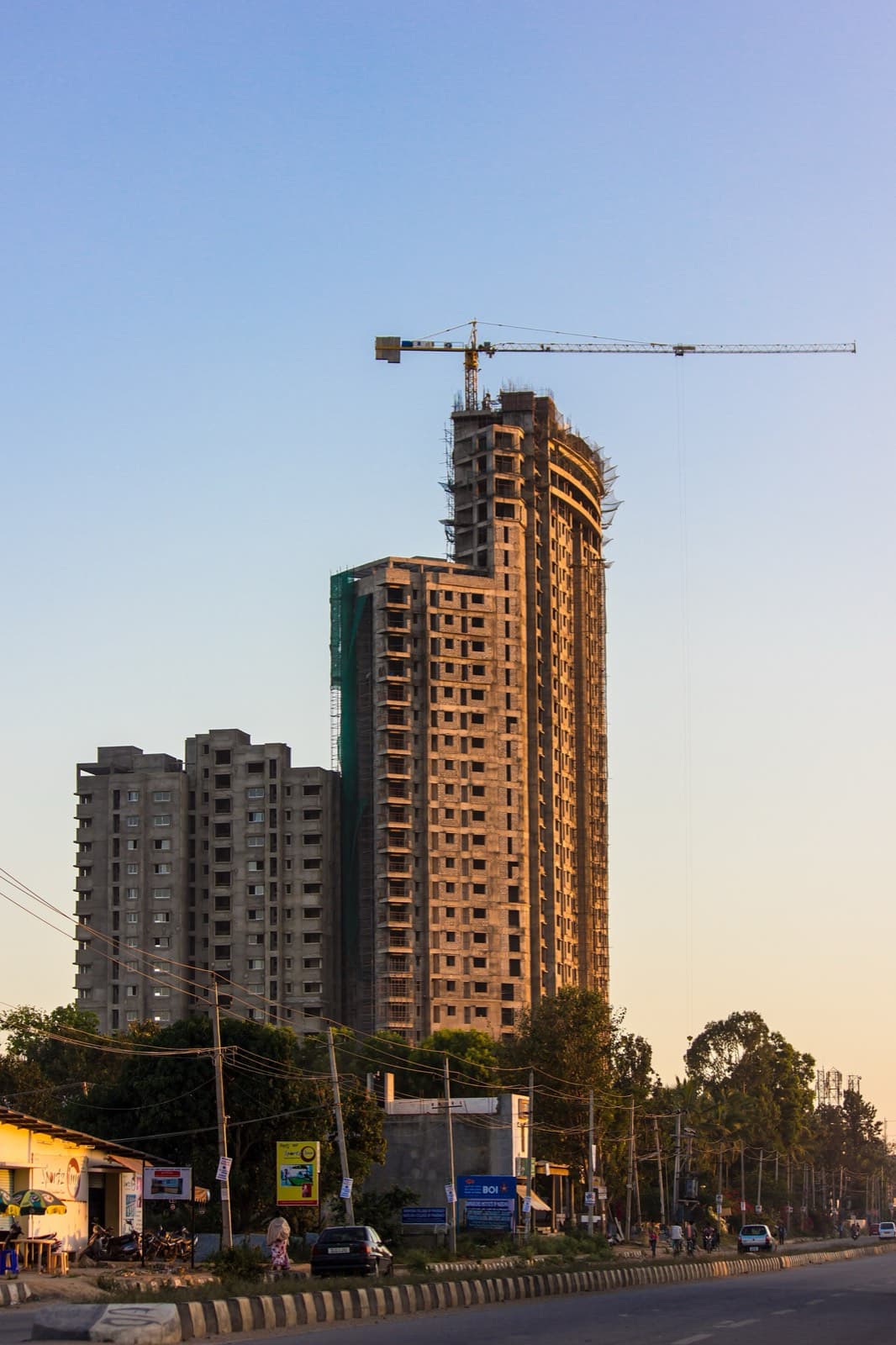
Cover photo: Wikimedia Commons / Saad Faruque from Bangalore, India — CC BY-SA 2.0
A practical guide for Bengaluru resale buyers on why one Sobha township can hold several RERA IDs, how phase-wise registration works, and what possession timelines really promise.
Why One Sobha Township Carries Multiple RERA Numbers
If you have ever browsed a large Sobha layout in Whitefield or Panathur and noticed three or four different RERA registration numbers attached to what looks like a single gated community, you are not imagining it. Under the Real Estate (Regulation and Development) Act and its Karnataka implementation, a developer registers each independently launched phase of a project as a distinct real-estate project, complete with its own approvals, timelines and escrow account. A township that sprawls across ten or twelve acres near PIN 560066 is rarely built in one continuous pour of concrete; it is broken into wings, blocks or phases that come to market months or even years apart.
This matters enormously for a resale buyer because the RERA number printed on the seller's brochure may cover only the wing in which their flat sits, not the amenities, clubhouse or landscaped podium that were marketed as part of the whole. Each phase has its own promised date of completion, its own extension history and its own occupancy status. Treating the township as one legal unit is the single most common mistake buyers make when they evaluate Sobha resale properties in Bengaluru.
The practical takeaway is simple. Before you fall in love with a two or three bedroom resale unit, identify exactly which RERA-registered phase the apartment belongs to, and study that specific registration rather than a neighbouring wing that may already be fully completed and occupied.
How Phase-Wise Registration Works Under Karnataka RERA
The Karnataka Real Estate Regulatory Authority requires that any project with more than eight units or occupying more than five hundred square metres be registered before a single flat is advertised or sold. When a developer plans to roll out a township in stages, each stage is filed separately on rera.karnataka.gov.in with its own layout plan, sanctioned building plan, list of towers, carpet-area statement and a quarterly-updated project progress report.
For a phased development this means the earliest wings might already hold an occupancy certificate while later wings are still showing bare foundations. Devanahalli projects near the airport corridor at PIN 562110 are a classic example, because land there is abundant and developers deliberately sequence launches to match absorption. A Thanisandra or north Bengaluru layout around 560077 may similarly show Phase 1 as complete, Phase 2 nearing handover and Phase 3 recently registered with a possession date three years out.
Because each phase maintains a separate escrow account, the money you pay is legally ring-fenced to construction of that phase alone. This is protective for buyers, but it also means the financial health and progress of one wing tells you very little about the wing you are actually buying into. Read the registration that governs your flat, not the one that happens to be the flagship of the marketing campaign.
Reading a Phased Possession Schedule Correctly
A phased possession schedule is essentially a promise, filed with the regulator, of when each wing will be handed over. When you open a project page for RERA verified apartments in Bengaluru, you will see a declared date of completion for that specific registration. Resale buyers frequently confuse the developer's original marketing timeline with the legally declared date, and the two are not always the same after extensions.
Read the schedule wing by wing. A township might advertise that residents can move in from a particular quarter, but the amenity block, the second clubhouse or the sports facilities could sit in a later phase whose completion date is well beyond the tower you are buying. If those shared facilities were central to your decision, their delay directly affects your living experience even though your own flat is ready.
Pay attention to the difference between the date construction physically finishes and the date the developer is legally bound to deliver. The RERA-declared date, including any approved extension, is the enforceable one. Any earlier date quoted by a broker or in a glossy brochure carries no legal weight and should never form the basis of your purchase decision or loan planning.
Occupancy Certificate Versus the Promised Date
The promised date of possession and the occupancy certificate are two very different milestones, and confusing them costs resale buyers dearly. The promised date is when the developer committed to hand over keys. The occupancy certificate, issued by the local planning authority such as the BBMP or the relevant panchayat or the BMRDA for outer areas like Devanahalli, is the legal confirmation that the building complies with sanctioned plans and is fit for human habitation.
A wing can be physically finished and even partly occupied long before its occupancy certificate is granted. Buying a resale flat in a wing that lacks a valid occupancy certificate exposes you to real risk, including difficulty registering the sale deed cleanly, problems obtaining permanent water and electricity connections, and potential penalties if the completed structure deviates from the sanctioned plan.
For any Sobha resale transaction in Bengaluru, insist on seeing the occupancy certificate for the specific block, cross-check it against the sanctioned plan filed on the Karnataka RERA portal, and confirm the flat number and floor match the approved drawings. If the occupancy certificate has not yet been issued, understand precisely why and how long the remaining approvals are expected to take.
Extension History and Schedule Risk
Karnataka RERA allows a developer to seek an extension of the registered completion date, and in genuinely exceptional circumstances a further extension may be granted by the authority. Every such extension is recorded against the project on the portal, which gives a diligent buyer a valuable window into how reliably a particular developer meets its own deadlines.
A phase that has been extended once may be nothing more than a routine consequence of monsoon disruption, labour availability or approval delays common across Bengaluru construction. A phase that has been extended repeatedly, or whose quarterly progress reports show construction lagging far behind the declared percentage completion, is flashing a warning that its handover could slip again. This pattern is especially worth watching in fast-launching corridors like Panathur at PIN 560103 and the Devanahalli belt where developers juggle several phases simultaneously.
Schedule risk is not abstract for a resale buyer. If you are counting on possession within a fixed window to end rental outflow or to time a home-loan disbursement, an extension can derail your finances. Study the full extension history of your specific wing, not the township average, and factor a realistic buffer into your own planning.
What Resale Buyers Must Verify on rera.karnataka.gov.in
The Karnataka RERA website is a free, public and surprisingly detailed tool, yet most resale buyers never open it. Start by searching for the project name and confirming the exact registration number of the phase in which your flat sits. Match the promoter name, the total number of units, the tower or block designation and the sanctioned carpet area against what the seller and broker have told you. Any discrepancy is a reason to slow down.
Next, examine the quarterly progress reports, the declared and revised completion dates, the list of approvals obtained and pending, and whether any complaints or orders have been filed against the project. The portal also lists litigation disclosed by the promoter and the encumbrance position, all of which shape the safety of your purchase. For genuinely RERA verified apartments in Bengaluru, every one of these fields should reconcile cleanly with the physical reality on site.
Finally, verify that the seller is transferring a unit that legally exists within the registered inventory and that the agent involved holds a valid RERA agent registration. A registered agent is bound by conduct rules and offers you a layer of accountability that an unregistered middleman never can, particularly important in high-churn resale markets around Whitefield and Thanisandra.
How Phase Delays Ripple Into Resale Value
Delays in a later phase can quietly erode the resale value of an already-completed wing, and buyers underestimate this connection. When a township's remaining phases lag, the promised amenities, the finished landscaping and the sense of a settled community all arrive late. Prospective purchasers touring the property see cranes, hoarding and construction dust rather than a mature address, and they discount their offers accordingly.
Conversely, a resale flat in a township whose phases are progressing on schedule, or are already fully delivered with occupancy certificates in hand, commands a premium because the buyer inherits certainty. In sought-after micro-markets such as Whitefield around 560066 and the Thanisandra corridor, this certainty premium can be the difference between a quick sale and months on the market.
Investors evaluating Sobha resale properties should therefore weigh phase maturity as carefully as location and layout. A completed, occupancy-certified unit in a partly-built township carries a different risk profile from an identical unit in a fully-finished one, and the price you pay should reflect exactly where the surrounding phases stand.
Remedies Available to Buyers Under RERA
One of the strongest features of the RERA framework is that it gives homebuyers enforceable remedies rather than mere goodwill. If a developer fails to hand over possession by the registered date, including approved extensions, the buyer is generally entitled to interest on the amounts paid for every month of delay, or in appropriate cases to withdraw from the project and seek a refund with interest and compensation.
Complaints are filed with the Karnataka Real Estate Regulatory Authority, and appeals lie with the Real Estate Appellate Tribunal. The process is designed to be more accessible and faster than ordinary civil litigation, and orders passed carry the weight of law. Buyers can also raise structural defect claims within the statutory defect-liability period after handover, obliging the developer to rectify workmanship issues at no cost.
For a resale buyer, the key is documentation. Ensure that your sale agreement, the assignment of the original allotment, and every payment are clearly recorded, because remedies flow to the person who holds the legal interest in the unit. Buying through a RERA-registered agent and confirming the phase status on the portal before you commit gives you both fewer surprises and a stronger footing if you ever need to enforce your rights.
Related Questions
Large townships are developed and launched in separate phases, and Karnataka RERA requires each phase to be registered as an independent project with its own approvals, escrow account and completion date. So a single gated community in Whitefield or Devanahalli can legitimately carry three or four RERA numbers. Always identify the specific registration that governs the wing your resale flat sits in.
Visit rera.karnataka.gov.in and search by project name or registration number for the exact phase of your unit. Confirm the promoter name, tower designation, unit count and carpet area, then review the quarterly progress reports, declared and revised completion dates, approvals and any complaints. Every field should reconcile with what the seller and site conditions show you.
The promised date is when the developer committed to hand over keys, while the occupancy certificate is the local authority's legal confirmation that the building complies with sanctioned plans and is fit to live in. A wing can be physically finished before its occupancy certificate is granted. Never complete a resale purchase in a block that lacks a valid occupancy certificate without fully understanding why.
Yes. Even if your wing is finished, ongoing construction in later phases delays shared amenities, landscaping and the mature feel of the community, which prospective buyers discount when they make offers. A township with all phases delivered and occupancy certificates in hand generally commands a resale premium in micro-markets like Panathur at 560103 and Thanisandra.
If handover slips past the registered date including approved extensions, you are generally entitled to interest on amounts paid for every month of delay, or to withdraw and seek a refund with interest and compensation. Complaints go to the Karnataka RERA authority, with appeals to the Real Estate Appellate Tribunal. Clear documentation of your agreement and payments is essential to enforce these rights as a resale buyer.
The law allows a routine extension of the registered completion date, and a further extension only in genuinely exceptional circumstances approved by the authority. Every extension is recorded on the portal against that specific phase. A single extension may be routine, but repeated extensions or lagging progress reports are a clear signal of schedule risk you should weigh carefully.
Have a specific property in mind?
Connect with our concierge desk for a private consultation.
More Insights
 Buying Guide
A Buyer's Guide to Resale Property in Bengaluru
Everything a homebuyer needs to know about purchasing a resale Sobha apartment or villa in Bengaluru, from paperwork and RERA checks to pricing, home loans and closing.
 Market Insight
East vs North vs South Bengaluru: Comparing Micro-Markets
A practical, zone-by-zone comparison of East, North and South Bengaluru resale micro-markets covering connectivity, rental yields, price trends and which buyer each corridor genuinely suits in 2026.
 Finance
Home Loans for Resale Purchases: What Changes vs New Bookings
Financing a resale Sobha flat in Bengaluru differs from a fresh builder booking on valuation, LTV, seller loan closure and paperwork. Here is what every resale buyer should plan for.