
Home Loans for Resale Purchases: What Changes vs New Bookings
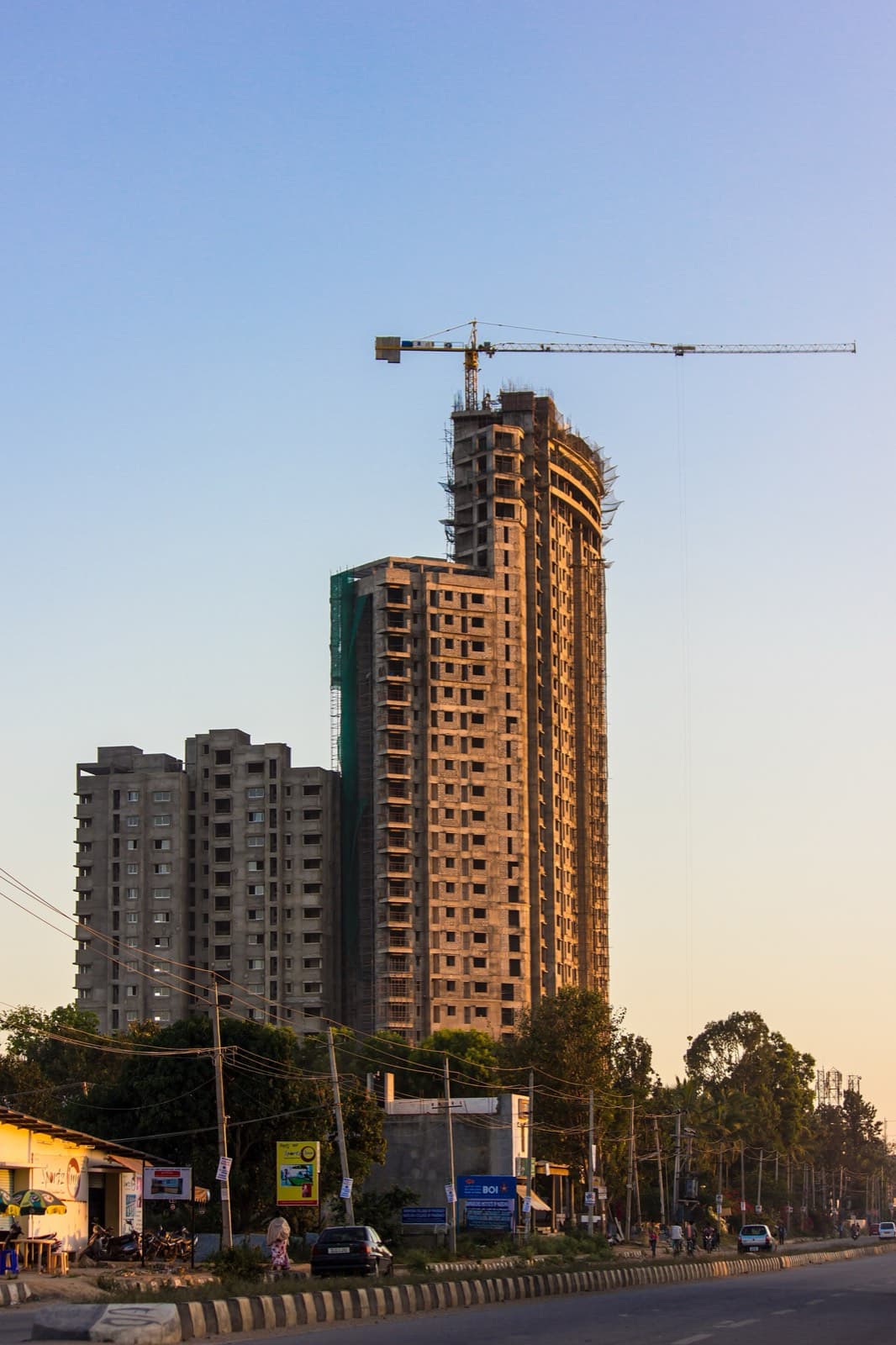
Cover photo: Wikimedia Commons / Monito - Money Transfer Comparison — CC BY 2.0
Financing a resale Sobha flat in Bengaluru differs from a fresh builder booking on valuation, LTV, seller loan closure and paperwork. Here is what every resale buyer should plan for.
Why a Resale Home Loan Is a Different Animal
When you book a new apartment directly from a developer, the bank is essentially lending against a project it has already vetted and approved. The builder price list, the payment schedule and the approved-project tag do most of the heavy lifting. A resale purchase flips this equation. Here you are buying from an individual seller, and the lender must satisfy itself about the specific unit, its title history and its market worth before releasing a single rupee.
For buyers hunting a home loan for a resale flat in Whitefield (560066) or along Sarjapur Road (560035), this means the loan journey involves more scrutiny of the property and less reliance on a builder tie-up. The upside is that resale Sobha units are usually ready-to-move, so you avoid construction risk and start earning rent or living in the home immediately.
Understanding these differences up front helps you budget accurately, keep more cash aside for the shortfall between loan and price, and avoid last-minute surprises at the registration desk. The sections below walk through every point where resale financing diverges from a fresh booking.
Valuation vs the Builder Price List
In a new booking, the sanctioned loan is tied to the builder cost sheet. In a resale deal the bank sends an empanelled valuer to physically assess the flat and issue a technical valuation report. The loan is then sized against the lower of the agreement value or this bank valuation, not the price you negotiated with the seller.
This matters enormously in mature Bengaluru micro-markets. A seller in a premium Sobha tower may quote a figure driven by amenities, floor rise and view, while the valuer works from recent registered transactions and the Karnataka guidance value for that locality. If the valuation comes in below your agreed price, the bank funds a percentage of the lower number and you must bridge the gap from your own funds.
Investors comparing resale options near me across Panathur, Bellandur and Varthur should factor a possible valuation gap into their cash planning. It is wise to ask the bank for an indicative valuation early, and to keep documentary proof of comparable sale deeds in the same project to support a fair number.
LTV, RBI Caps and Your Down Payment
The Reserve Bank of India sets loan-to-value ceilings that all lenders follow. For home loans up to 30 lakh, banks may fund up to 90 percent of value; between 30 and 75 lakh the ceiling is around 80 percent; and above 75 lakh it drops to roughly 75 percent. Crucially, this percentage applies to the property value, and stamp duty and registration charges are excluded from the fundable amount.
In practice a resale Sobha apartment on Sarjapur Road priced at 1.5 crore might attract a 75 percent LTV, meaning you arrange around 37 to 38 lakh as down payment plus the full stamp duty and registration on top. In Karnataka stamp duty runs about 5 to 6 percent and registration about 1 percent, so on a 1.5 crore deal that is another 9 to 10 lakh in registration costs alone.
Because resale valuations can print lower than the negotiated price, your effective down payment is often higher than the headline LTV suggests. Buyers should build this cushion into their budget rather than assume the bank will fund a flat 80 percent of the cheque they hand the seller.
Building Age and Loan Tenure
New bookings enjoy full tenure of up to 30 years because the asset is brand new. For resale, the age of the building directly shapes both the sanctioned tenure and, sometimes, the LTV. Lenders assess the residual life of the structure, and a common rule is that the loan tenure plus the current age of the building should stay within the structure's estimated economic life of 50 to 60 years.
A ten-year-old Sobha tower in Whitefield will still comfortably support a long tenure, which is one reason well-built branded resale stock in Bengaluru finances easily. Older or poorly maintained buildings, by contrast, may see tenure trimmed, raising the EMI and squeezing eligibility.
Your own age matters too. The tenure cannot run past your retirement age for salaried applicants, usually around 60, or a slightly higher cap for self-employed borrowers. If you are in your forties buying a resale flat, the bank may cap the loan at 15 to 18 years, so consider adding a younger co-applicant to stretch tenure and improve affordability.
Closing the Seller's Existing Loan: The Tripartite Route
A large share of resale flats still carry an outstanding home loan on the seller's name, with the original property documents held by the seller's bank. This is where resale financing becomes genuinely different from a clean new booking. You cannot register a property whose title deeds sit in another lender's vault, so the seller loan must be closed and the papers released as part of the transaction.
The standard mechanism is a tripartite arrangement between your bank, the seller's bank and both parties. Your lender issues a cheque or transfer directly to the seller's bank to clear the outstanding balance. The seller's bank then issues a loan closure letter, a no-objection certificate and releases the original documents, after which your bank creates its own charge on the property.
This choreography adds time and coordination. Ask early how much the seller still owes, whether both banks are willing to work together, and how the difference between the loan payoff and the sale price will be routed. Building a few extra weeks into your timeline avoids the stress of a stalled registration when funds and documents must move in sequence.
Documents Banks Demand for a Resale Deal
Resale loans carry a heavier property document checklist than new bookings because the bank must trace the full ownership chain. Expect to furnish the mother deed, the chain of previous registered sale deeds, the current seller's title deed, the latest encumbrance certificate typically covering 13 to 30 years, and the khata certificate and khata extract from the BBMP or relevant panchayat.
You will also need up-to-date property tax paid receipts, the sanctioned building plan and occupancy certificate, the apartment association or society share certificate and a no-dues letter for maintenance, and if a prior loan exists, the closure documents described earlier. A guidance-value driven valuation and legal opinion from the bank's panel advocate round out the file.
On your side the paperwork mirrors any home loan: identity and address proof, PAN, income documents such as salary slips and Form 16 or ITRs for the self-employed, and bank statements. The property-side documents are where resale buyers get delayed, so collecting the encumbrance certificate and a clean khata early keeps the sanction moving. E-khata compliance has become a practical must in Bengaluru, and lenders increasingly insist on it.
Buying an Under-Construction Resale and Disbursement Tranches
Not every resale is ready-to-move. Sometimes an original allottee sells an under-construction unit before possession, transferring the builder-buyer agreement through a nomination or assignment. Financing this hybrid blends resale and new-booking rules. The bank needs the developer's consent to the transfer, the tripartite arrangement if the seller had a loan, and confirmation of how much has already been paid to the builder.
Disbursement then follows construction-linked tranches for the balance still owed to the developer, rather than a single lump sum. The bank pays the seller for the equity already built up and releases the remaining slabs directly to the builder as construction progresses. During this period you typically service pre-EMI interest on the amount disbursed so far.
These deals are more complex and warrant careful reading of the assignment terms, any transfer fee the developer charges, and whether GST implications survive the resale. For most buyers seeking a home loan for a resale flat in Bengaluru, a completed and registered unit remains the simpler and safer path.
Interest Rates, Eligibility and What Moves Them
Resale and new-booking home loans are priced from the same external benchmark linked framework, so the headline rate is broadly similar. What varies is your individual eligibility profile. A credit score above 750, a stable income, a low existing debt burden and a healthy foldback ratio all fetch finer rates, while a thin credit history pushes pricing up.
Lenders cap total EMIs, including the new loan, at roughly 50 to 60 percent of your net monthly income. Adding a co-applicant with independent income, especially a spouse, lifts eligibility and can also unlock better tax outcomes. Women borrowers sometimes receive a small rate concession and, in Karnataka, a marginally lower stamp duty slab on lower-value properties.
For a resale specifically, watch that a shortened tenure driven by building age does not inflate the EMI beyond your comfort. Investors evaluating rental yield on a Sobha resale unit near me should model the EMI against realistic rent for that PIN code, since a Whitefield 560066 two-bedroom commands different rent than a plotted or peripheral asset.
Tax Benefits, Fees and Choosing Bank vs NBFC
The tax treatment of a resale home loan is identical to a new one. Under Section 24(b) you can claim up to 2 lakh a year on interest for a self-occupied property, and the principal repayment qualifies under Section 80C up to the overall 1.5 lakh limit, which also covers your stamp duty and registration in the year of purchase. A key advantage of resale is that the property is usually complete, so the interest deduction starts immediately rather than after the five-year construction window that can dilute new-booking benefits.
On costs, budget for a processing fee of roughly 0.25 to 1 percent of the loan, plus legal and technical valuation charges, CERSAI and documentation stamping, and any franking or e-stamp costs. Resale deals can carry a few hidden extras, such as the seller-bank loan closure charges, society transfer fees and dues clearance, so ask for a full cost sheet before committing.
Finally, weigh a bank against an NBFC or housing finance company. Banks generally offer the lowest rates and are strict on documentation, which suits clean resale titles. NBFCs are often more flexible on eligibility, self-employed income and slightly older buildings or informal khata situations, though usually at a marginally higher rate. For a well-documented Sobha resale flat in a mature Bengaluru locality, a mainstream bank typically wins on cost; for trickier profiles, an NBFC can be the pragmatic choice.
Related Questions
The headline rate is broadly the same because both are priced off the same external benchmark framework. Your actual rate depends on your credit score, income stability and loan amount rather than on whether the flat is resale or a fresh booking. The real differences appear in tenure, LTV and valuation, not the interest rate itself.
The bank funds its LTV percentage on the lower valuation figure, not on your negotiated price. You must cover the shortfall from your own funds along with stamp duty and registration. For resale flats in areas like Sarjapur Road or Whitefield, ask for an indicative valuation early and keep comparable registered sale deeds handy to support a fair number.
This is handled through a tripartite arrangement. Your bank pays the seller's bank directly to close the outstanding loan, the seller's bank issues a no-objection certificate and releases the original documents, and your bank then creates its charge on the property. Confirm the payoff amount and both banks willingness to coordinate before fixing your registration date.
Yes. Lenders keep the loan tenure plus the building's current age within its estimated economic life of about 50 to 60 years. A well-maintained ten-year-old Sobha tower still supports a long tenure, while older or poorly kept structures may see tenure and LTV trimmed, which raises your EMI and reduces eligibility.
The property-side papers are the usual bottleneck. Banks want the mother deed, the chain of prior sale deeds, an encumbrance certificate covering 13 to 30 years, khata certificate and extract, tax receipts and the occupancy certificate. Collecting the encumbrance certificate and ensuring a clean, e-khata compliant title early keeps the sanction moving smoothly.
For a well-documented Sobha resale flat with clean title in a mature locality, a mainstream bank usually offers the lowest rate and is the better choice. NBFCs and housing finance companies are more flexible on self-employed income, older buildings or informal khata situations, but generally charge a slightly higher rate for that flexibility.
Have a specific property in mind?
Connect with our concierge desk for a private consultation.
More Insights
 Buying Guide
A Buyer's Guide to Resale Property in Bengaluru
Everything a homebuyer needs to know about purchasing a resale Sobha apartment or villa in Bengaluru, from paperwork and RERA checks to pricing, home loans and closing.
 Legal & RERA
Understanding RERA Phases: What Multi-Wing Possession Really Means
A practical guide for Bengaluru resale buyers on why one Sobha township can hold several RERA IDs, how phase-wise registration works, and what possession timelines really promise.
 Market Insight
East vs North vs South Bengaluru: Comparing Micro-Markets
A practical, zone-by-zone comparison of East, North and South Bengaluru resale micro-markets covering connectivity, rental yields, price trends and which buyer each corridor genuinely suits in 2026.